THE FIRST STEP · 4 MIN READ
Find your pace. Then your place.
A useful way to think about experience, terrain and the days in between.
Fitness is one part of the picture
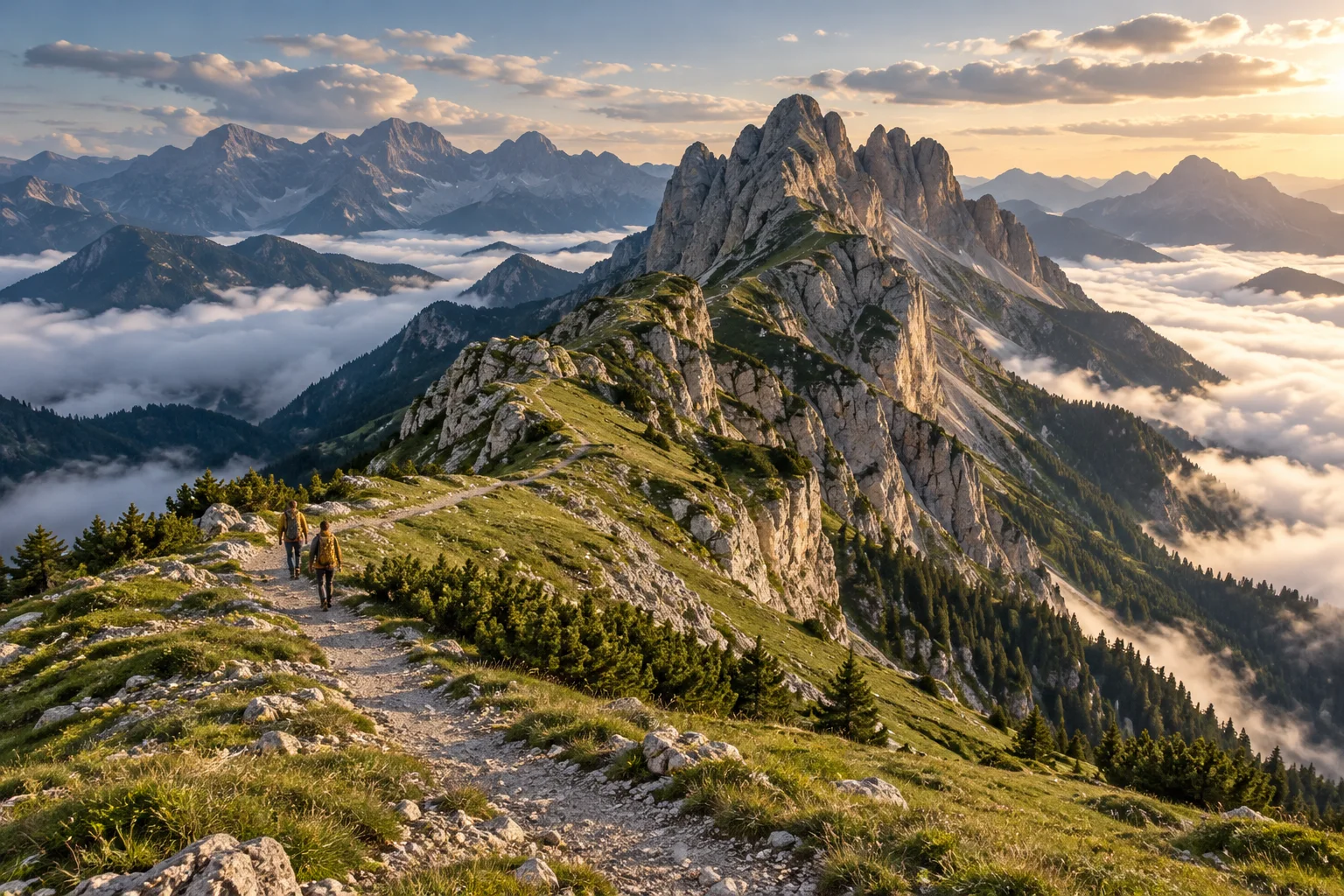
A short distance on unfamiliar, uneven ground can feel very different from the same distance in a park. Compare time on your feet, elevation change, the surface and how many days repeat. Our sample route cards show these separately because a single difficulty label cannot tell the whole story.
Choose a learning edge, not a proving ground
A beginner route should leave room to learn without needing to keep up with a group working on different skills. An experienced route should explain its demands plainly. Neither label is a judgment of character. For a real trip, discuss your recent experience and any access needs with the actual operator.
Leave space around the big day
A rest day is part of a thoughtful itinerary. Travel, sleep, changing weather and unfamiliar surroundings all affect how a week feels. In the planner, add a quiet day and see the total change. It is an editable planning exercise, not an assessment of what is safe for you.